From Europe
DOH and DXB are the most competitive. Turkish via IST is excellent from Eastern Europe. Test SIN or KUL for interesting routings. Open-jaw CMB in + MLE (Maldives) out sometimes beats round-trip pricing.
Sri Lanka’s single main international gateway (CMB) serves both the famous south and west beaches and the cultural triangle in the centre. Monsoon timing, Gulf hub competition, and Indian holiday surges mean the cheapest flights to Sri Lanka require deliberate date and routing strategy. This guide gives you the complete playbook.
Sri Lanka has one primary international airport (CMB) serving a country with two distinct monsoon seasons and a very strong cultural + beach tourism product. When European winter (Dec–Mar) aligns with the dry season on the south and west coasts, demand surges and fares rise 40–60% above shoulder.
The southwest monsoon (May–Sep) makes the south and west wetter, but the east coast (Arugam Bay, Trincomalee, Passikudah) is then in its dry season. Airlines and resorts discount heavily in the May–September window. Travelers who are flexible about which coast they visit first can save dramatically.
Hub competition is intense because Sri Lanka sits at the end of long thin routes from Europe and is a convenient stop for Gulf carriers on the way to the Maldives and Southeast Asia. The result is real fare windows for those who know when to look.
Bandaranaike International (CMB) handles the vast majority of international traffic. Mattala (HRI) in the south has very limited service. Almost every traveler — whether heading to the beaches, Sigiriya, Kandy or Yala — arrives at CMB.
Sri Lanka’s primary international airport. Direct flights from Doha, Dubai, Istanbul, Singapore, Kuala Lumpur, Bangkok, Delhi, Mumbai, and seasonal Europe. Good connections to domestic airports and rail.
CMB → Colombo city 30–45 min, Negombo 20–30 min, Galle/South 2–3h, Kandy 3–4h, Sigiriya/Dambulla 3.5–4.5h. Pre-book private transfers or use ride apps / hotel shuttles.

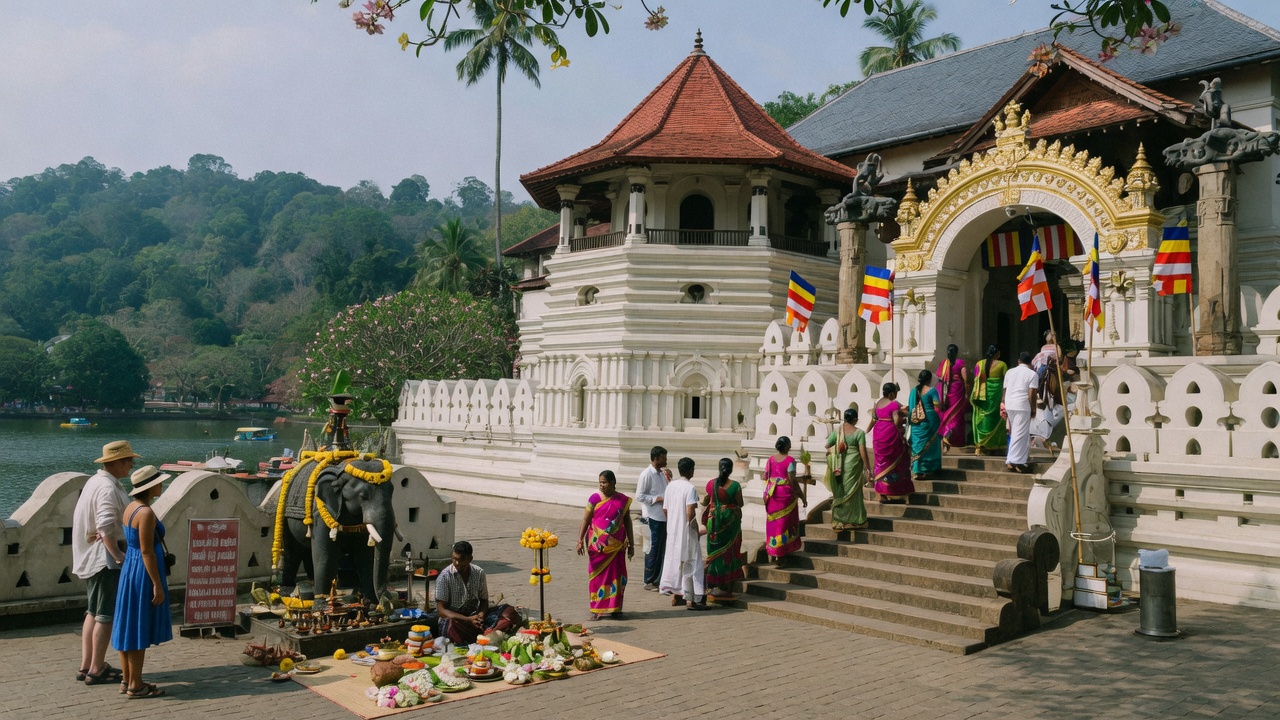


Sri Lanka has two monsoon seasons that affect different coasts. The fare calendar is driven more by European winter demand and Indian festival timing than by local rain.
Dry on south and west coasts. Peak European winter escape + Indian holidays. Fares 40–60%+ above shoulder. Book 4–5 months ahead.
Good value. Weather improving or still pleasant on many coasts. Excellent time for south + cultural triangle without peak prices.
Southwest monsoon affects south/west. East coast (Arugam Bay, Trinco) is dry and excellent. Deepest airfare discounts of the year.
| Month | Fare index | Weather | Booking note |
|---|---|---|---|
| December–March | ★★★★★ Peak | Dry south/west | Highest prices; book early |
| April | ★★★☆☆ Mid | Transition | Good shoulder value |
| May–September | ★☆☆☆☆ Lowest | Wet south/west, dry east | Best value window; east coast excellent |
| October–November | ★★☆☆☆ Low–Mid | Improving | Strong shoulder before winter peak |
Sri Lanka is a leisure-driven destination with a very pronounced European winter peak. Long-haul carriers protect inventory aggressively around Christmas through March.
May–September and October shoulder are more forgiving — good fares often appear 8–12 weeks out, especially on Gulf carriers.
CMB benefits from being on the way to the Maldives and Southeast Asia for many carriers. Your connection city often matters more than exact departure day.
DOH and DXB are the most competitive. Turkish via IST is excellent from Eastern Europe. Test SIN or KUL for interesting routings. Open-jaw CMB in + MLE (Maldives) out sometimes beats round-trip pricing.
Via DOH, DXB or SIN. West Coast travelers can test via Tokyo/Seoul + connection, but Gulf + CMB is usually more reliable on price and schedule.
SIN, KUL, BKK and direct India–CMB options on AirAsia, IndiGo, Air India and SriLankan. Shoulder months regularly produce very low fares from Australia.
AirAsia, Scoot, SriLankan and IndiGo compete aggressively. Separate tickets on LCCs from SIN, KUL or Indian cities often beat through-fares.
Some engines default to “Sri Lanka” and hide options. Always use the airport code to surface every airline and routing.
Midweek departures from Gulf hubs and Europe average 12–20% less. Moving by 4 days often drops you into a lower fare bucket.
Book Europe–DOH/DXB on one ticket, then separate Gulf LCC or Indian LCC to CMB. Allow 3.5h+ connection buffer.
CMB in + MLE (Maldives) out, or CMB in + BOM/DEL out, often undercuts pure round-trip CMB pricing for two-destination trips.
Add internal train or driver costs for cultural triangle + beach. A $120 cheaper fare that forces an extra night in Colombo can lose its advantage.
The east is dry and beautiful while the south is wet. Airfares are at their lowest — perfect for wildlife, surfing and culture.
Gulf and Asian carriers release promotions 8–12 weeks before May–Sep and Oct–Nov. Set alerts and act fast when sales appear.
Sri Lanka total cost is heavily influenced by internal travel (private driver is standard for most itineraries) and the choice of coast vs cultural triangle focus.
| Cost component | Budget scenario | Mid-range | Premium |
|---|---|---|---|
| Roundtrip airfare (Europe) | $520–720 (shoulder/monsoon, 1-stop) | $780–1,050 (shoulder) | $1,300+ (peak Dec–Mar) |
| Private driver + vehicle (10–14 days) | $450–650 (shared or small car) | $750–1,100 | $1,400+ (luxury + guide) |
| CMB ground + internal flights/trains | $80–150 | $150–250 | $300+ |
| Estimated total (ex-hotel) | $1,050–1,550 | $1,700–2,400 | $3,000+ |
Sri Lanka offers Electronic Travel Authorisation (ETA) or visa on arrival / e-visa options for most nationalities for tourism stays. Requirements vary by passport and length of stay. A return or onward ticket is usually required.
Use the Tikitikita visa check tool for your nationality and always confirm on the official Sri Lanka ETA portal close to travel, as rules can be updated.
May–September (southwest monsoon) and the October–November shoulder are the lowest fare periods. The east coast is dry and excellent during these months.
Yes for practical purposes. Bandaranaike (CMB) is Sri Lanka’s main international gateway. Almost all travelers arrive here regardless of final destination.
3–5 months for December–March. 2–3 months (sometimes 8–12 weeks on sales) for May–September and shoulder. Early booking is essential for peak dry season on the south coast.
Doha (DOH) and Dubai (DXB) are the strongest on price and frequency. Turkish via IST is excellent from Eastern Europe. Singapore and Kuala Lumpur are competitive alternatives.
Yes — especially May–September. The south and west see more rain, but the east coast is dry and beautiful. Airfares and many hotels drop significantly.
Most visitors need an ETA or e-visa / visa on arrival. Rules depend on your passport. Confirm with the official Sri Lanka ETA site and the Tikitikita visa tool.
Extend your Sri Lanka search with these Tikitikita resources: