From Europe
Compare nonstops (seasonal Thai Airways or others from major cities) against one-stops via Singapore, Bangkok, Doha and Dubai. Tuesday/Wednesday departures from secondary European cities often undercut London or Frankfurt by €70–150.
Phuket is Thailand’s most popular beach island — and one of the hardest to price correctly because of its position in the global leisure market. HKT is the only airport, monsoon timing creates clear fare windows, and fierce competition from Singapore, Bangkok and the Gulf means the cheapest flights to Phuket rarely appear in a single search. This guide breaks down every variable.
Phuket has a single international airport (HKT) serving one of Southeast Asia’s most popular beach and island-hopping markets. When European winter escapees (Nov–Mar), Australian school holidays, and Chinese New Year overlap, demand on the thin long-haul routes rises sharply and airlines protect yields.
At the same time, the southwest monsoon (May–Oct) creates the opposite extreme: lower demand and promotional pricing from both full-service carriers and LCCs. Rain is usually short afternoon showers on the west (Andaman) coast. Travelers who accept these months routinely save 30–50% versus peak dry-season fares.
Hub competition is fierce because Phuket sits at the end of long routes from Europe and is a convenient extension for travelers already flying to Bangkok or Singapore. Airlines from the Gulf, Singapore and Bangkok fight hard for the traffic — which is good news for flexible travelers who know where to look.
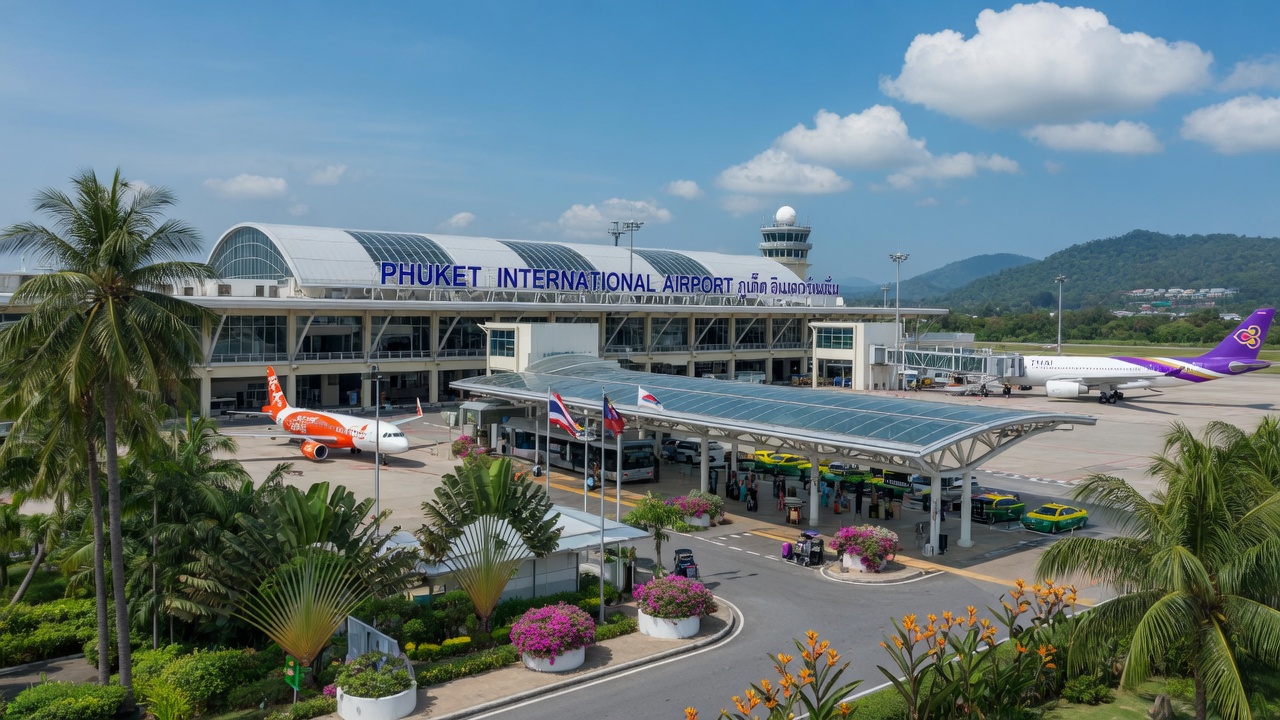
Phuket International (HKT) handles all commercial international and domestic traffic for the island. There is no secondary airport. All travelers — whether staying in Patong, Kata, Karon, Kamala, Nai Yang, or heading to Phi Phi or other islands — arrive at HKT.
The sole commercial airport. Nonstops from Europe (seasonal), Australia, China, Korea, Japan, Singapore, Kuala Lumpur, Bangkok, Doha, Dubai and many other Asian cities. Domestic hub for Thai Airways, AirAsia, Nok Air and Thai Lion Air.
HKT → Patong/Kata/Karon 45–70 min, Phuket Town 30–45 min, Nai Yang 15–25 min, Airport → Phi Phi ferry pier ~45–60 min + ferry. Pre-book private transfers or use Grab/taxis. Airport bus and shared minivans available.
| Route | Grab / Taxi | Private transfer | Notes |
|---|---|---|---|
| HKT → Patong / Kata / Karon | THB 600–1,000 | THB 800–1,400 | 45–70 min depending on traffic |
| HKT → Nai Yang / Mai Khao | THB 300–500 | THB 500–800 | 15–25 min; closest beaches |
| HKT → Phuket Town | THB 400–700 | THB 600–900 | 30–45 min |
| HKT → Rassada Pier (Phi Phi ferry) | THB 500–800 | THB 700–1,000 | 45–60 min + 1.5–2h ferry |
| Late-night arrival surcharge | +20–50% | Pre-agreed | After 22:00–23:00 common |
Analyzing HKT prices requires balancing headline airfare against ground costs, baggage fees, and any island-hopping transfers. A HKT ticket $80 cheaper can lose its advantage if you need two checked bags and a private transfer to the west coast at night.


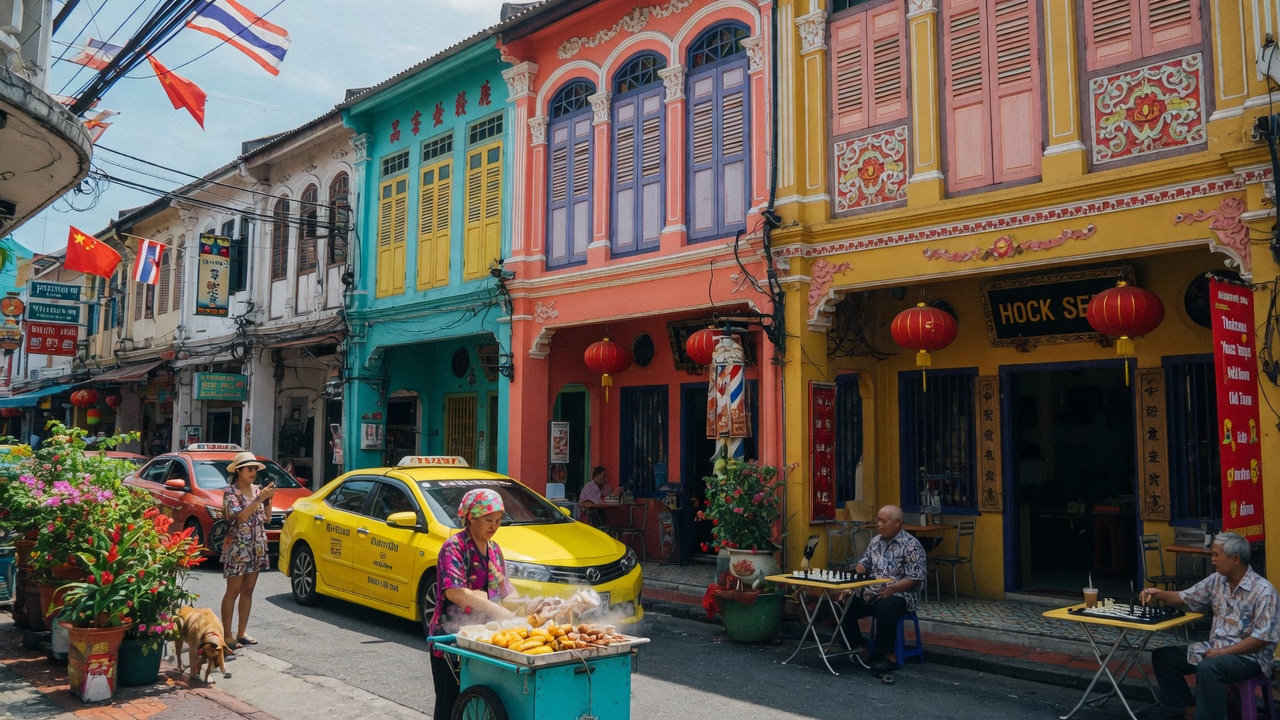
Phuket’s tropical climate and dual-hemisphere demand create a very clear price map. The island is busiest when Europe, Australia and China are on school/holiday breaks; shoulder months between these peaks offer the best value.
Dry season, perfect Andaman Sea weather. Peak European winter escape + Australian and Chinese holidays. Fares 35–60% above monsoon baseline. Book 4–5 months ahead.
Transition months. Good value, fewer crowds. April (Songkran) can spike locally. May and October are often the best balance of price and weather.
Southwest monsoon = lowest demand. September and early October are the cheapest months to fly to Phuket on most long-haul routes. Rain is usually short and localized.
| Month | Fare index | Weather (west coast) | Booking note |
|---|---|---|---|
| November–February | ★★★★★ Peak | Dry, perfect | Christmas/New Year + Chinese NY surge |
| March | ★★★☆☆ Mid-High | Dry | Still strong winter sun demand |
| April (Songkran) | ★★★★☆ High | Hot, start of rain | Local holiday spike |
| May–June | ★☆☆☆☆ Lowest | Rain begins | Best value before peak monsoon |
| July–August | ★★☆☆☆ Low | Wet, warm | Low demand, good diving |
| September | ★☆☆☆☆ Lowest | Heavy rain possible | Best month for fare hunters |
| October | ★★☆☆☆ Low | Rain tapering | Deep discounts before high season |
Long-haul routes into Southeast Asia rarely reward last-minute booking. Revenue management systems on Thai Airways, Qatar, Emirates and Singapore Airlines typically raise close-in fares sharply within 21 days of departure.
For a deeper month-by-month breakdown, see our dedicated resources. This destination guide focuses on the full search architecture beyond timing alone. Shoulder months (May–Jun, Sep–Oct) are more forgiving — good fares can appear 8–12 weeks out.
Phuket’s position in global aviation means your connection city often matters more than your departure day. Run parallel searches through these hubs before committing.
Compare nonstops (seasonal Thai Airways or others from major cities) against one-stops via Singapore, Bangkok, Doha and Dubai. Tuesday/Wednesday departures from secondary European cities often undercut London or Frankfurt by €70–150.
No true nonstops. West Coast travelers should test via Tokyo, Seoul or Singapore. East Coast: compare Qatar via Doha vs. Singapore via SIN — total journey time and price can differ significantly.
Direct options on Thai, Qantas/Jetstar codeshares, and Scoot. Shoulder months (May, Sep–Oct) regularly produce AUD $550–750 return fares from Sydney/Melbourne when booked 10–14 weeks out.
Singapore, Kuala Lumpur and Bangkok routes are among the world’s most competitive. Search DMK specifically for AirAsia and Nok Air combinations that often beat full-service BKK–HKT fares by 20–30%.
Some engines treat “Phuket” as a region. Always use the airport code to surface every airline serving the island.
Moving departure by one day can shift you into a lower fare bucket. Midweek (Tue–Thu) departures average 12–18% less than Friday/Sunday.
Book Europe–SIN or Europe–BKK on one ticket, then separate SIN–HKT on Scoot or BKK–HKT on AirAsia. Self-transfer risk exists — allow 4+ hour layovers.
Fly into Phuket, depart from Krabi (KBV) or Koh Samui (USM), or vice versa. Open-jaw searches sometimes beat round-trip HKT pricing for multi-island trips.
Add baggage ($30–60/bag), seat fees, and airport transfers. A $420 fare with two bags and a private transfer to Patong can exceed a $480 all-inclusive fare.
Track May 1–20, Sep 15–Oct 15 and shoulder weeks around Songkran. Airlines release promotional inventory 6–10 weeks before departure in these periods.
From the UK: try Manchester, Edinburgh, and Birmingham. From the US: Oakland, Chicago, and Boston often beat NYC/LAX on Gulf carrier connections. From Australia: try secondary cities.
The best way to find cheap flights to Phuket is to optimize total landed cost — what you actually spend from front door to resort check-in, including any island-hopping transfers.
| Cost component | Budget scenario | Mid-range | Premium |
|---|---|---|---|
| Roundtrip airfare (Europe) | $520–720 (monsoon, 1-stop) | $780–1,050 (shoulder, 1-stop) | $1,300+ (peak, nonstop/1-stop) |
| Checked baggage (2 bags, LCC) | $60–120 extra | Included (full-service) | Included |
| HKT → west coast resort (private) | $18–30 (Grab/shared) | $30–50 | $60–90 (VIP) |
| Phi Phi or other island day/transfer | $40–70 pp | $80–130 pp | $150+ pp (speedboat/private) |
| Estimated total (ex-hotel) | $650–950 | $920–1,300 | $1,600+ |
Thailand offers visa-free or visa-on-arrival access to citizens of 60+ countries for tourism stays up to 30–60 days (rules vary by nationality and are updated periodically). Phuket uses the same entry rules as Bangkok. Before locking in non-refundable fares, confirm your passport validity (6+ months remaining is standard) and return-ticket requirements.
Use the Tikitikita visa check tool to filter routes compatible with your passport. Entry rules do not affect airfare directly, but a visa denial turns the cheapest flight into the most expensive mistake.
For airport arrival logistics, see resources covering HKT immigration queues, baggage claim and transport options once you land.
May–October (especially May–June and September–early October) consistently rank as the cheapest months to fly to Phuket on long-haul routes. Rain is usually short-lived; the east coast and some activities remain excellent.
Yes. Phuket International (HKT) is the island’s sole commercial airport. All travelers arrive here regardless of which beach or island they are visiting next.
Book 3–5 months ahead for high-season travel (November–March) and Songkran (April). For shoulder months (May–Jun, Sep–Oct) 2–3 months is often enough. From the Gulf and Singapore, good fares can appear 8–12 weeks out.
Singapore (SIN), Bangkok (BKK/DMK), Doha (DOH) and Dubai (DXB) are the most competitive. SIN offers the best time/price balance for many; Gulf carriers frequently post the lowest fares.
Yes. June through October sees reduced demand and promotional pricing. Rain in Phuket is usually short-lived afternoon showers. Monsoon season is one of the best value periods for flexible travelers.
Many nationalities receive visa-free entry for tourism (30–60 days depending on passport). Requirements are the same as for mainland Thailand. Check the Tikitikita visa tool before booking.
Extend your Phuket search with these Tikitikita resources: